matt harvey art
Portrait paintings, art demonstrations, figurative painting, landscapes
Portrait painting and glazing
Posted on July 24, 2017
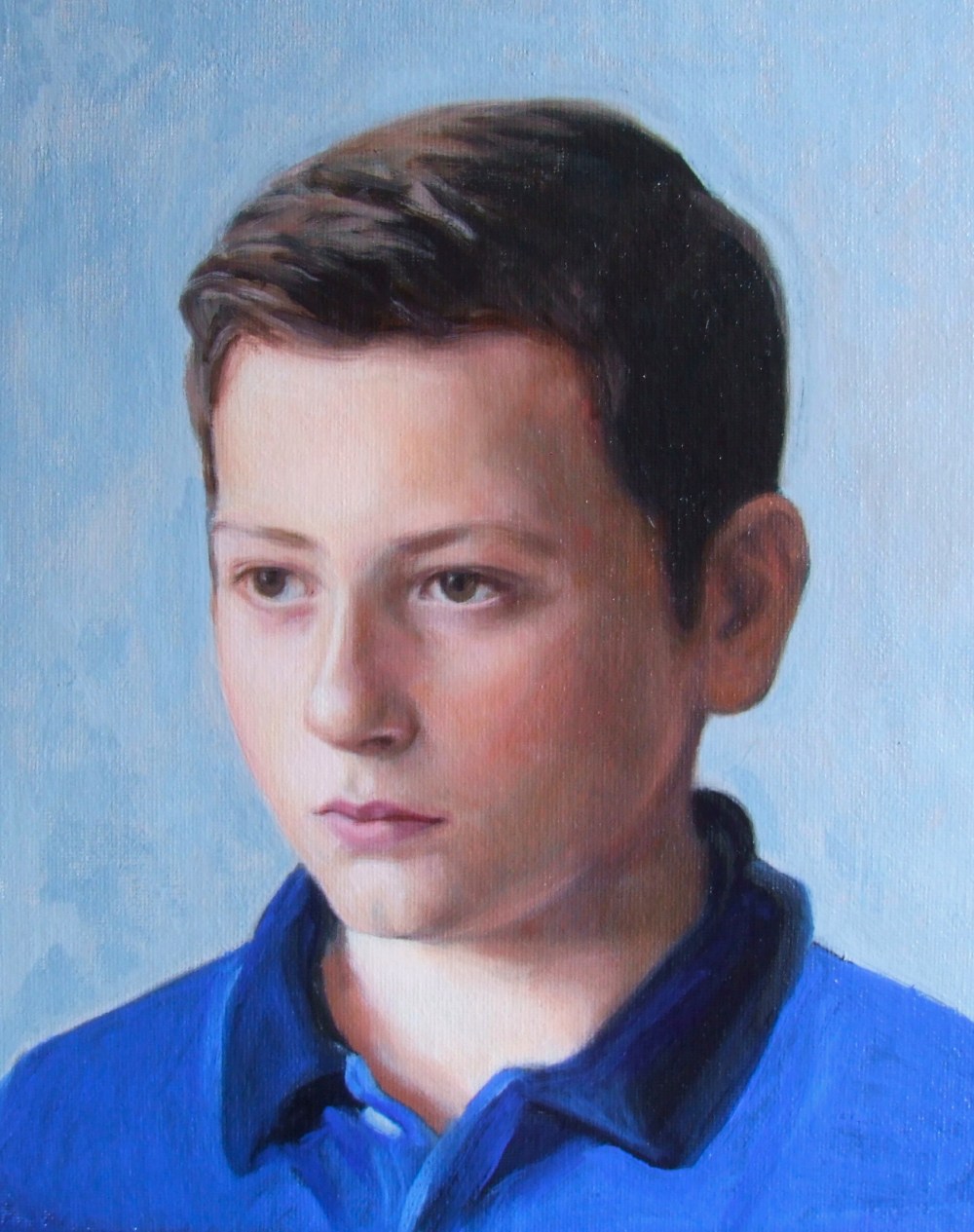
This boy had a head with a great symmetry and the final portrait had an almost hieratic quality. There was a lot of correcting while painting the glazes, but as Philip Guston said, painting should have a moral aspect, and somehow all the effort spent in painting a picture or portrait is stored as a kind of moral worth. The opposite would be something like doing it with a photoshop app and a click of a button.
Here is a recent portrait commission using the grisaille method, where the colour glazes overlap and create an optical effect as the light passes through each layer. This one has around 6-8 layers of oil glaze over the grey underpainting. As I have mentioned before, I use M. Graham’s walnut alkyd medium, which dries quickly enough and doesn’t give me a headache. I was constantly repainting and working into the drawing as I went, and the main problem in the end is the risk of over-working it, so at this stage I decided to call it a day.
The portrait has a rather serious quality that I like. There was a lot of revising and correcting, but the head looks as if it could be carved out of marble. As a sculptor by training I definitely enjoyed painting this head with its beautiful symmetry. It’s one of those things but I would rework it if I could get it back now, but actually I couldn’t because it lives in its own time and I correct it in further paintings. Each painting is part of a long chain of work that link one to the other, and each painting has its own quality, for better or worse. Actually I would have loved to carve a portrait sculpture based on this portrait.
There was a lot of correcting while painting the glazes, because the grisaille was probably not complete at the time of the first glaze. But as Philip Guston said, painting should have a moral aspect, and somehow all the effort spent in painting a picture or portrait is stored as a kind of moral force. The opposite would be something like doing it with a photoshop app and a click of a button. This is absolutely true and you can always sense this in a painting, and in the most subtle way all the effort, all the revisions and alterations, all the agony and effort, and joy, show in the final painting. Philip Guston was a true hero of art.
Revelation with colour glazing
Posted on May 31, 2017
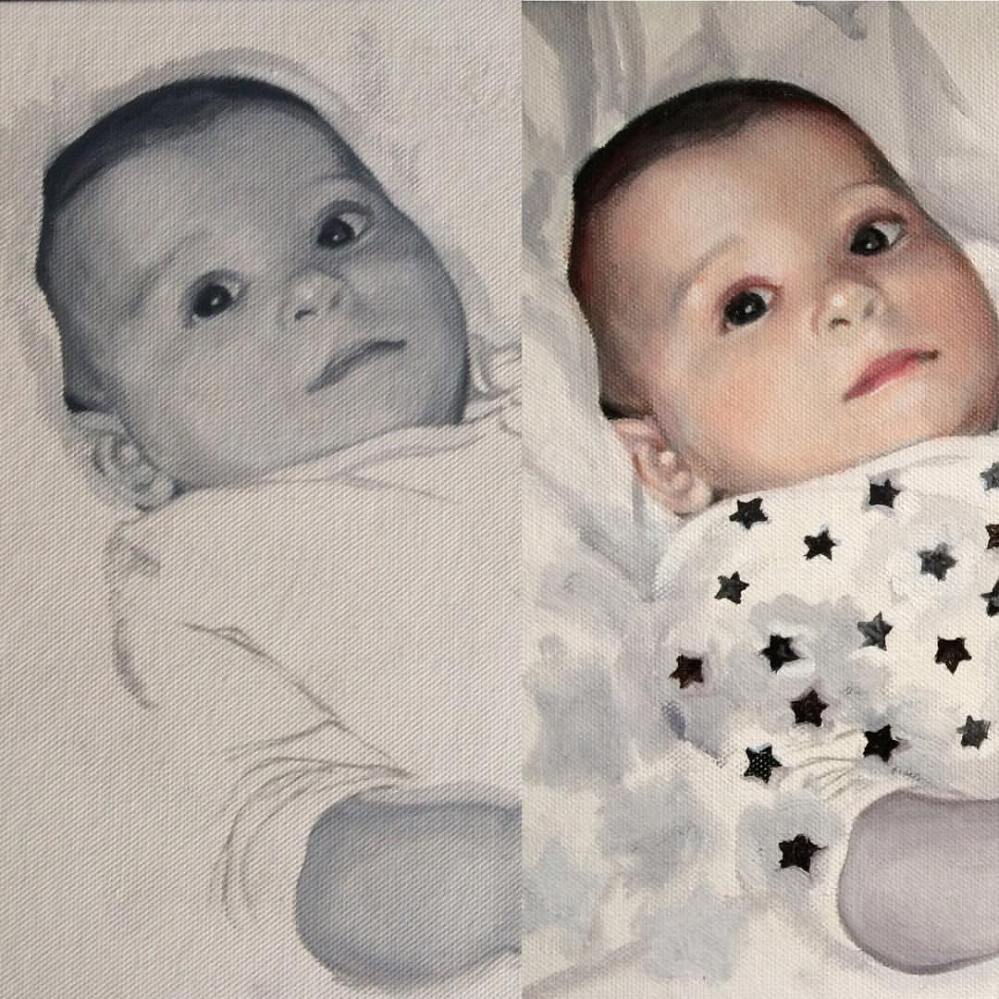 One of the most important things that has happened to me in all the years I have been portrait painting was going on a course run by Louis Smith in 2014, learning about glazing. Looking at his website I thought this would be about glazing as I understood it where you have a very thin translucent layer of paint and you go over a grey underpainting, or dead layer, like Caravaggio or Ingres. We learned to glaze over an underpainting, but the glazes felt more like ‘half-pastes’ as they were not entirely transparent. Even so it transformed the way I approached colour mixing for portrait paintings, and I learned amazing colour combinations of reds and greens which are now the foundation of my approach to painting a face. I’ll write about them in another blog post. I found out about Louis Smith from Jonathan Jones, the Guardian newspaper art critic.
On the course, which was over a weekend, we used a monochrome print from another portrait and went step by step through the process of building up areas of colour, slowly refining and blending each.
Portrait of Florence, oil on canvas
Posted on May 27, 2017


For this portrait as usual I used a canvas on board, and cropped it slightly to fit the subject. I started with a grisaille underpainting using Raw Umber and Titanium White and a little medium. I’m hovering between a straightforward Ivory Black and White underpainting, and other versions, mainly Raw or Burnt Umber and White. Burnt umber has a little more warmth. I’ve looked around online and you can see people painting with blacks which are made up of reds mixed with greens, e.g. Alizarin Crimson and Viridan Green, or again different blues and browns. At school I was taught by my militant impressionist teacher Mr. Baines that using black was sinful and one should only EVER mix blacks optically, and his chosen mix was Burnt Sienna and Cobalt Blue. You can mix a nice black from these two, but I went off Burnt Sienna a while ago (I’m sure I’ll come back to it – at the moment it just has a bit too much character, like someone talking very loudly at a party, so you can here them wherever you’re standing!). I think you can achieve a deeper black mixed from Burnt Umber and Ultramarine or Cobalt Blue.
Having said all that, in the name of efficiency I have stripped back all of my processes to avoid unnecessary headaches so I generally I use Ivory Black and Titanium White! I have also learned from Louis Smith that a little Alizarin Crimson mixed in with Ivory Black gives it more depth, so I also do this on occasion.
The thing is that I can achieve this depth at a later stage by glazing darker colours over the underpainting so again the Alizarin Crimson gets ditched when I want to simplify the process. I’m possibly lazy, but if you are working on something over a few sessions and have to mix the colours each time inconsistencies can creep in and so thats just another layer of process that can be removed.
You can see an example of the depth achieved through glazing in the image below where the grisaille is actually quite bland in comparison. Dark glazes in and around the eyes give huge depth (generally I won’t use black at this stage and mainly use Alizarin and Sap Green or Cadmium Red and Viridian, or blues or browns or whatever..). This is the first glaze and already it has transformed the tonal range of the portrait.

First glazing over grisaille portrait
Posted on March 6, 2017
I’ve put the first colour glaze put on this portrait in 2 stressful hours! A few more glazes needed and I’ll add them over the coming days. I use M. Graham’s Walnut Alkyd medium which dries overnight – or to be extra sure within 48 hours. I enjoyed painting his ear and chuffed with the result! It felt good to achieve some economy of handling with the paint, and not get bogged down in it. #ear #chuffed #figurativeart #contemporaryart #portraitpainting #portrait #grisaille #underpainting #oilpainting #oiloncanvas #realism #art #painting #glaze #devonartistnetwork #devonopenstudios #devon
Portrait painting in stages
Posted on January 12, 2017
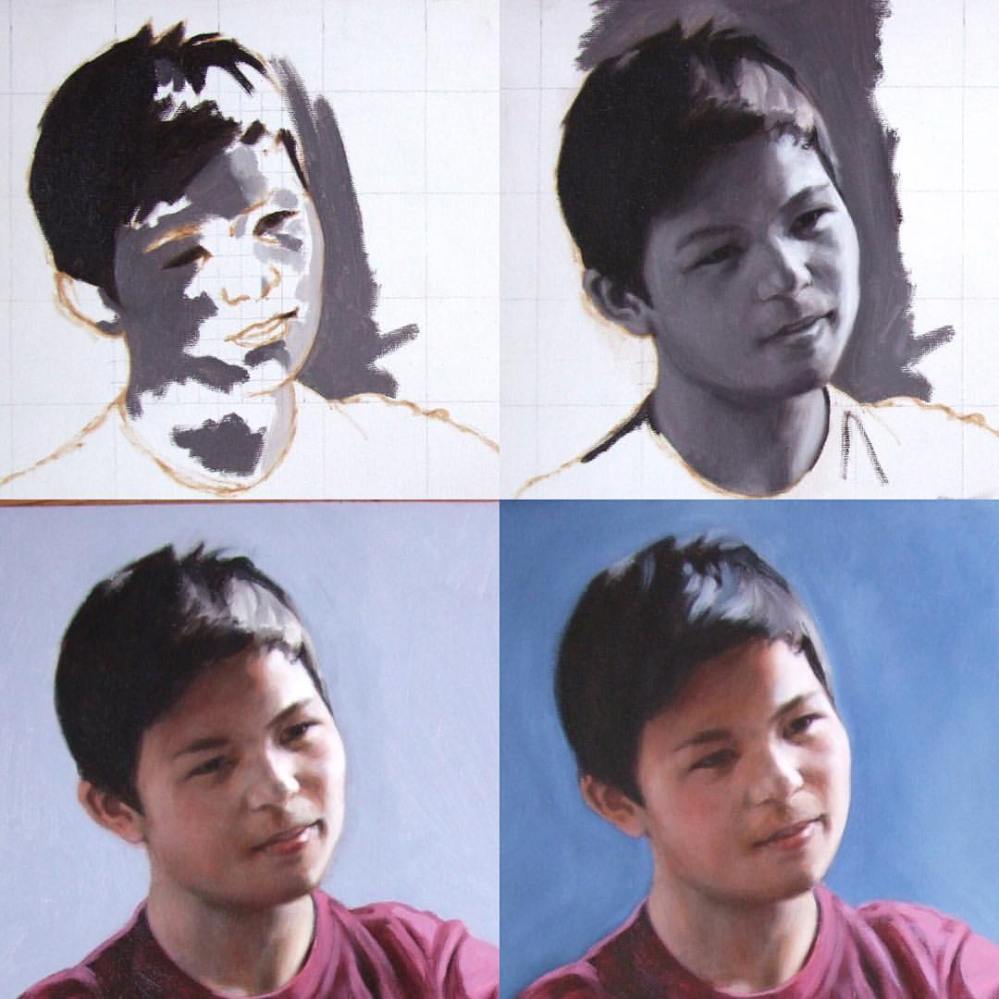
This is an early example and one of my first efforts at glazing over a grisaille underpainting, a portrait I painted of Dai, in stages. You can see the grid system I used to copy the original photograph reference. I don’t have a strict methodology of working from darkest darks to lightest lights that you can sometimes read about on academic portrait painting sites, and work intuitively. The painting doesn’t use so many glazes, maybe 3 or 4, but at the time I felt it had a nice quality and I left it. #contemporaryart #realism #underpainting #art #portrait #grisaille #underpainting #portraitpainting
 matt harvey art